Overview
Building a Web3 marketplace from scratch
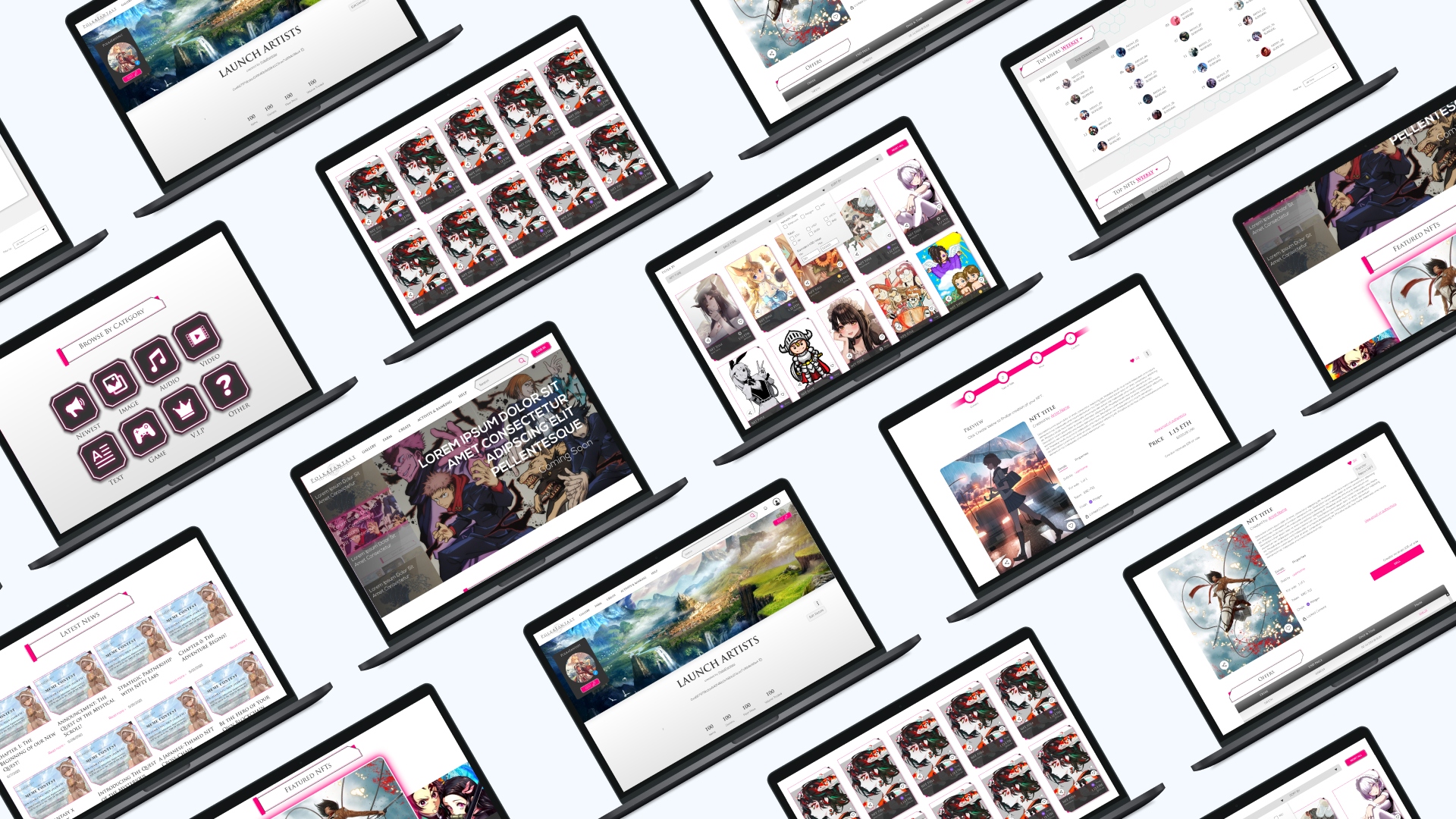
PolkaFantasy is a Japanese anime-themed NFT platform on the Polkadot blockchain. In late 2021, the team needed a fully featured NFT marketplace where users could browse, buy, sell, and trade anime-themed digital assets — with a responsive design that worked seamlessly across desktop and mobile.
I joined as both UX designer and project manager within a team of 7, taking ownership of the end-to-end design process while also coordinating engineering delivery and stakeholder communication.
Challenge
Making Web3 approachable
NFT marketplaces in 2021 had a steep UX learning curve. Wallet connections, gas fees, blockchain confirmations — all of this was opaque to mainstream users. Our audience included both crypto-native collectors and anime fans who were brand new to Web3.
Crypto-native users
Expected speed, low friction, and advanced filtering. Wanted to see provenance data, rarity traits, and floor prices at a glance.
Anime fans / newcomers
Unfamiliar with wallets, gas, or blockchain. Needed guided onboarding, clear explanations of what they were buying, and reassurance at every step.
The design challenge: build a marketplace that served both audiences without alienating either — keeping power features accessible without overwhelming newcomers.
Design Process
Research to high-fidelity
01
Competitive Analysis
Audited OpenSea, Rarible, and Foundation to identify UX patterns users already understood. Catalogued friction points and adopted conventions where they reduced cognitive load.
02
User Flows & Information Architecture
Mapped the critical user journeys: browse → view NFT → connect wallet → buy. Identified 6 failure states and designed recovery flows for each.
03
Wireframes → Prototype
Iterated from low-fidelity wireframes to a high-fidelity Figma prototype in 3 rounds. Prioritised the listing card, NFT detail page, and checkout flow — the three most complex surfaces.
04
Responsive Design
Designed mobile-first, then adapted to desktop. The grid-based listing layout used CSS Grid to responsively reflow from 1 to 4 columns across breakpoints.
05
Engineering Handoff & QA
Managed the design-to-dev handoff in Figma with annotated specs. Participated in QA testing to catch visual regressions before launch.
Key Design Decisions
What mattered most
Wallet-first onboarding
Instead of burying wallet connection in a modal, we surfaced it as the primary action in the hero — with a clear explanation of why it was needed and what would happen.
Rarity as hierarchy
NFT rarity traits were visualised as a clear tier system with colour-coded badges. This let collectors quickly identify high-value assets without digging into metadata.
Anime art direction
The UI leaned into the anime aesthetic — dark backgrounds, neon accents, stylised card treatments — making the marketplace feel native to the content, not generic.
Transaction transparency
Every purchase step showed the breakdown: item price, gas fee, total. No surprises at the confirmation screen — a direct response to pain points seen on competitor platforms.
Outcome
Launch results
Beta launch — December 2021
The marketplace beta launched in December 2021 and generated over $50,000 USD in NFT sales in its initial period. The anime-forward design was well-received by the community, and the wallet onboarding flow significantly reduced support tickets compared to similar launches in the space.